Beyond the Checklist: Why Effective Conflicts of Interest Programs Are Central to Ethics and Compliance
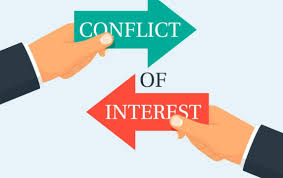
Conflicts of interest are not abstract compliance niceties. They are serious risks to integrity that, if left unidentified or unmitigated, can erode employee trust, compromise decision-making, and expose organizations to regulatory enforcement, litigation, and reputational harm. Recent high-profile scandals involving relationships between supervisors and subordinates have underscored how personal conflicts can quickly morph into enterprise-wide compliance failures when controls, oversight, and ethical culture are weak.
A conflict of interest program, when thoughtfully designed and actively managed, is far more than a static policy on a shelf. It is a risk identification and mitigation engine that anticipates where incentives might diverge from organizational interests, assesses control effectiveness, and embeds ethical decision-making into everyday business processes.
Conflicts of interest arise wherever personal interests have the potential to interfere — or appear to interfere — with the objective performance of professional duties. Classic examples include financial interests in third parties, personal relationships that influence work decisions, and outside employment that competes with an employer’s interests.
Last year’s news cycle offered stark reminders of the latter risk manifesting in the workplace. Multiple widely reported scandals involved senior supervisors and subordinate employees engaged in inappropriate relationships that blurred professional boundaries. In at least two public-company cases, those relationships:
- compromised promotion and compensation decisions,
- triggered internal investigations after complaints of favoritism, and
- culminated in board-level reviews and leadership changes once the matters became public.
While the particulars varied, the root cause was the same: insufficient structures to identify and manage the personal and professional conflicts that occur when power dynamics intersect with personal affiliations.
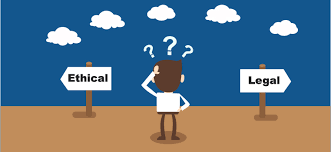
These are not errors in judgment isolated to individuals — they are systemic control failures that signal weaknesses in risk assessment, oversight, and ethical culture.
A robust conflict of interest program begins with systematic risk identification. Too often, organizations rely on one-time disclosures or annual attestations that do little more than check boxes. Effective risk identification requires:
- Risk-based assessments tailored to roles and functions,
- Clear criteria that capture not just financial conflicts but personal relationships that could influence business decisions, and
- Regular refreshers of disclosures tied to changes in roles, responsibilities, and reporting structures.
For example, a manager whose responsibilities include hiring, performance evaluations, or compensation decisions over a subordinate should be required to disclose not only financial connections but any personal relationship that could reasonably be perceived to compromise impartiality.
Identification without incentivizing candor is futile. Employees must be confident that reporting conflicts won’t automatically result in punitive outcomes — rather, it should signal the start of a risk management conversation.
Mitigation is where many programs fall short. Simply identifying a conflict does little to protect the organization if there are no mechanisms to manage the risk. Effective mitigation demands:
- Clear escalation paths and documentation of mitigation decisions,
- Role re-assignments or recusal protocols when necessary,
- Elevated reviews for sensitive career decisions involving supervisory relationships, and
- Monitoring to confirm that mitigation steps remain effective over time.
Consider a scenario where a manager discloses a relationship with a subordinate. A robust program should trigger a pre-defined mitigation workflow — such as reassigning supervisory responsibility to an independent manager or establishing oversight by a neutral committee — rather than leaving mitigation to informal judgment.
Controls are the operational backbone of any conflict program. Effective organizations deploy a mix of:
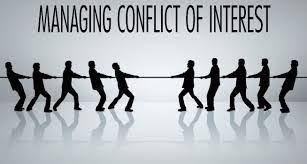
- Preventive controls such as pre-employment screening and upward reporting lines for supervisory approvals;
- Detective controls like automated data analytics to flag unusual relationships between personnel records and decision outcomes; and
- Corrective controls that help remediate issues before they escalate.
A strong control environment also features regular audits of disclosures and control effectiveness, with findings reported to senior leadership and, where appropriate, to the audit or compliance committee.
Weak controls not only fail to prevent conflicts; they signal to employees that ethical boundaries are optional — a message that regulators have repeatedly criticized in enforcement actions across industries.
Finally, conflict programs cannot function in isolation from organizational culture. Clear policies must be reinforced through training, leadership modeling, and consistent enforcement. When employees see leaders hold themselves accountable, they are more likely to take conflicts seriously.
Culture also influences how employees interpret gray areas. If the environment tacitly rewards sales results or operational performance without regard to ethical considerations, conflicts will fester — often out of sight until they erupt into scandals.
A robust conflict of interest program is a risk management imperative, not a regulatory afterthought. It requires active identification, thoughtful mitigation, disciplined controls, and an ethical culture that supports transparency and accountability.
The workplace relationships and scandals of the past year illustrate that conflicts — particularly those involving power differentials — are not hypothetical. They are real, pervasive, and potentially destructive if left unchecked.