

If You Don’t Have an Automated Compliance Program, You Don’t Have an Effective Program

For years, I have consistently pushed organizations and compliance professionals to embrace technology and automated solutions as a core component of an effective ethics and compliance program. That message is even more urgent today.
Let me put it bluntly: if your compliance program is not automated in key areas, you do not have an effective compliance program—by definition.
The compliance environment has changed dramatically. Companies operate globally, manage thousands of third parties, process enormous volumes of financial transactions, and face expanding regulatory expectations. The scale and complexity of modern business risks simply cannot be managed through manual compliance processes.
Yet many organizations continue to rely on spreadsheets, email chains, and fragmented systems to manage critical compliance functions. Those approaches are not only inefficient—they are dangerous. Manual systems create delays in identifying risks, inconsistent application of controls, weak documentation, and serious blind spots in oversight.
Today, regulators expect something very different. They expect companies to operate structured, technology-enabled, data-driven compliance programs.
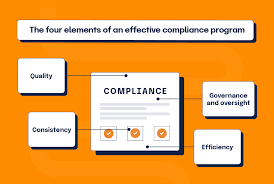
Automation has become essential across the core pillars of compliance.

Consider third-party risk management, which remains one of the highest enforcement priorities for regulators worldwide. Many companies maintain hundreds or even thousands of agents, distributors, suppliers, consultants, and other intermediaries. Screening, onboarding, risk scoring, due diligence, contract approvals, training, and ongoing monitoring cannot realistically be managed through manual processes. Automated third-party platforms allow organizations to standardize due diligence procedures, track risk ratings, document approvals, and continuously monitor third parties for sanctions exposure, corruption risk, or other compliance concerns.
The same applies to conflicts-of-interest management. Employees must regularly disclose outside business interests, financial relationships, and potential conflicts. Automated disclosure systems allow employees to submit certifications, route approvals to supervisors or compliance personnel, flag high-risk disclosures, and maintain a documented record of the organization’s response.
Automation is also essential for policy management. Companies must distribute policies across global workforces, track certifications, maintain version control, manage translations, and document employee acknowledgements. A centralized automated policy system ensures employees receive the appropriate policies and provides regulators with proof that the company has communicated its standards effectively.
Increasingly, companies are implementing automated integrated risk management (IRM) platforms that connect compliance, enterprise risk management, internal audit, cybersecurity, and operational risk functions. These platforms allow organizations to map risks, assign controls, track remediation efforts, and generate meaningful reporting for management and boards.
But automation is not limited to workflow management. Artificial intelligence and advanced analytics are transforming how companies monitor financial activity and detect misconduct.

Organizations today have the ability to deploy technology that conducts continuous transaction monitoring, analyzes financial records in real time, and identifies anomalies that may signal fraud, corruption, or other misconduct. AI-driven tools can detect unusual payment patterns, suspicious vendor relationships, duplicate payments, round-dollar transactions, or activity that falls outside established risk parameters.
Instead of relying on periodic manual reviews, automated monitoring systems can analyze thousands—or millions—of transactions and flag unusual activity immediately. Compliance teams can then investigate potential issues before they escalate into serious problems.
AI and analytics also enable organizations to conduct behavioral pattern analysis, identifying shifts in employee activity, expense reporting, procurement activity, or vendor payments that may indicate emerging risk.
The advantages of automation are substantial.
First, automated systems create consistency and standardization across the organization. Compliance processes follow defined workflows rather than ad hoc procedures.
Second, technology provides visibility and continuous monitoring, allowing compliance teams to identify risks much earlier.
Third, automated platforms generate audit-ready documentation. When regulators ask how a company manages third-party risk, monitors financial transactions, or tracks conflicts disclosures, the company can demonstrate structured processes supported by reliable data.
Finally, automation frees compliance professionals to focus on what matters most: strengthening ethical culture, training employees, and advising leadership on risk management rather than spending valuable time managing spreadsheets.
Technology will never replace human judgment or ethical leadership. But technology is now indispensable to operating a credible compliance program.
Regulators increasingly expect companies to leverage automation, data analytics, and artificial intelligence to strengthen risk detection and compliance oversight. Organizations that fail to adopt these capabilities will struggle to demonstrate that their programs are effective.
The bottom line is straightforward: automation is no longer optional in compliance. It is foundational.
If your compliance program still depends primarily on manual processes, spreadsheets, and disconnected systems, it is time to rethink your approach. Automated solutions exist today for third-party risk management, conflicts-of-interest tracking, policy management, transaction monitoring, integrated risk management, and many other functions.
Organizations that embrace automation—and increasingly AI-enabled monitoring—will build stronger, more scalable compliance programs. Those that do not will find themselves increasingly exposed to operational failures, regulatory scrutiny, and preventable misconduct.
In today’s risk environment, automation and intelligent monitoring are not enhancements to compliance—they are the foundation of an effective program.







1 Response
[…] You Need an Automated Compliance Program (Volkov Blog) […]