DOJ Indicts Chinese Shipping Container Cartel: A Wake-Up Call for Antitrust Compliance

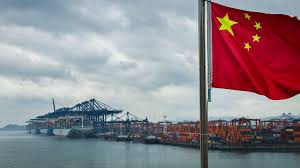
The Justice Department’s Antitrust Division has struck a major blow against international cartel conduct with a historic superseding indictment charging four of the world’s largest shipping container manufacturers and seven of their senior executives for a multi-year conspiracy to restrict output and fix prices affecting roughly $35 billion in global commerce.
The case involves conduct at the heart of America’s COVID-era supply chain crisis. And for compliance professionals worldwide, it is one of the most important antitrust enforcement wake-up calls in years.
The Defendants
The four corporate defendants are China International Marine Containers (CIMC), Singamas Container Holdings, Shanghai Universal Logistics Equipment (operating as Dong Fang International Containers), and CXIC Group Containers. Together with two unnamed co-conspirator companies, these six manufacturers control approximately 95 percent of global production of standard unrefrigerated dry containers — the steel, truck-sized boxes that carry most of the world’s goods across the oceans.
The seven individual defendants include the CEOs and senior executives of all four charged companies:
- Siong Seng Teo, 71, CEO and Chairman of Singamas
- Boliang Mai, 67, Chairman and CEO of CIMC
- Tianhua Huang, 62, Vice President of CIMC
- Yongbo Wan, 47, General Manager of CIMC
- Qianmin Li, 62, General Manager of Dong Fang
- Yuqiang Zhang, 49, CEO of CXIC
- Vick Nam Hing Ma, 54, Marketing Director of Singamas — the only defendant arrested to date, seized at Charles de Gaulle Airport in April 2026 during what DOJ dubbed “Operation Midnight in Paris”
The remaining six defendants are at large.
The Conspiracy
According to the superseding indictment, the scheme began as early as November 2019, when executives from CIMC, Dong Fang, CXIC, and a fifth unnamed company met at CIMC’s Shenzhen headquarters. Their objective was straightforward: artificially restrict container supply to drive prices higher.
The mechanics were brazen. The conspirators agreed to limit production line shifts, installed 87 surveillance cameras across all 49 dry container production lines to police compliance, agreed not to build new manufacturing facilities, and established a financial penalty fund to punish any company that exceeded agreed production quotas. Singamas joined the scheme no later than March 2020. By September 2020, the cartel had expanded to restrict supplies to specific major U.S.-based customers — container lessors, shipping lines, and logistics companies.
The results were devastating. Container prices more than doubled between 2019 and 2021. CIMC’s container manufacturing profits exploded from approximately $19.8 million in 2019 to $1.75 billion in 2021. Singamas swung from a $110 million loss in 2019 to nearly $187 million in profit by 2021. American consumers faced empty store shelves, mounting backorders, and surging prices on essential goods during one of the most difficult periods in modern history.
The defendants’ own emails capture their awareness of wrongdoing. One participant wrote: “I feel very uneasy reading your report. Maybe we should delete this string of emails after reading?” Another flagged the risk of “violat[ing] the Monopoly Law or being accused of price manipulation by our customers.” They proceeded anyway.
This is exactly the kind of conduct an effective antitrust compliance program is designed to prevent — and detect.
Why Antitrust Cartel Compliance Programs Matter
This case is a textbook illustration of what happens when antitrust compliance is absent or ignored at the leadership level.
The conspiracy was not concealed from senior management. It was driven by senior management. CEOs, chairmen, and vice presidents of the world’s largest container companies were the architects of the scheme. That reality makes this case both an enforcement story and a governance failure of the first order.
Effective antitrust compliance programs must be built around several core elements. First and most fundamentally, they require genuine tone at the top. When executives are the perpetrators — not the guardians — no compliance infrastructure below them can compensate. Boards of directors must actively oversee antitrust risk, ask hard questions about competitor interactions, and make clear that cartel conduct is an absolute prohibition without exception.
Second, companies need robust antitrust training tailored to their specific business risks. Employees in sales, pricing, operations, procurement, and business development need to understand what conduct crosses the criminal line — price discussions with competitors, output restriction agreements, market allocation arrangements, and bid rigging. The training must be concrete and scenario-based, not abstract legal lectures.
Third, companies must establish clear policies governing competitor interactions — including trade association meetings, industry conferences, and informal communications. The container cartel operated through in-person meetings, messaging platforms, and email threads. A compliance program needs to set explicit rules about what can and cannot be discussed when competitors are in the room.
Fourth, antitrust compliance programs require strong internal reporting and escalation mechanisms. Employees who observe suspicious competitor communications or receive overtures from rival companies must know exactly where to report and must trust that doing so will not cost them their jobs.
Fifth, document retention and communication policies matter. The emails in this case are extraordinarily damaging precisely because executives discussed deleting them — a consciousness of guilt that will follow these defendants at trial. Training employees on proper communication practices and document retention is not just a legal hygiene issue. It is an antitrust risk management imperative.
Finally, compliance programs must include periodic antitrust risk assessments and audits. Industries with concentrated market structures, significant trade association activity, commodity pricing, and cross-border competitor relationships — like container manufacturing — carry elevated cartel risk and deserve heightened compliance attention.
Charges and Penalties
All defendants face one count of conspiracy in restraint of trade under Section 1 of the Sherman Antitrust Act. For individuals, the statute carries a maximum of 10 years in prison and $1 million in fines — though fines may be doubled based on actual gains derived from the crime. For corporations, the maximum fine is $100 million, subject to the same doubling provision. Given the profit figures alleged, actual exposure could far exceed the statutory baselines.
Conclusion
This indictment is a milestone in international cartel enforcement. It demonstrates that DOJ will pursue Chinese nationals and Chinese-based corporate defendants aggressively, coordinate with foreign law enforcement partners to arrest executives in transit, and treat cartel conduct as a serious criminal priority — not a civil matter to be resolved quietly.
For compliance professionals, the message is equally direct. Antitrust cartel risk is real, it is criminal, and it requires a serious, proactive compliance program. Companies operating in concentrated industries with significant competitor interaction need to assess their antitrust risk today — not after an indictment lands.
The Antitrust Division has made its position clear. Fix prices, and DOJ will find you — even boarding a midnight flight in Paris.