EU Export Controls Continue to Evolve Beyond Traditional Dual-Use Frameworks
The European Commission recently published an Information Note concerning measures adopted by Member States under Regulation (EU) 2021/821, the European Union’s framework governing the control of exports, brokering, technical assistance, transit, and transfer of dual-use items. Although administrative in structure, the report provides meaningful insight into the continuing evolution of export controls across the European Union and highlights the increasingly significant role that Member States are playing in shaping national export control obligations beyond the baseline framework established under the Dual-Use Regulation itself. In particular, the materials demonstrate that export controls within the European Union are becoming progressively more decentralized, more dependent upon national implementation measures, and increasingly focused on transaction context and end-use considerations rather than purely list-based classification analysis. The report therefore serves not merely as a compilation of technical notifications, but as a broader indication of how European export control authorities are approaching strategic technologies, sensitive end uses, and national security related export oversight in an increasingly complex geopolitical environment.
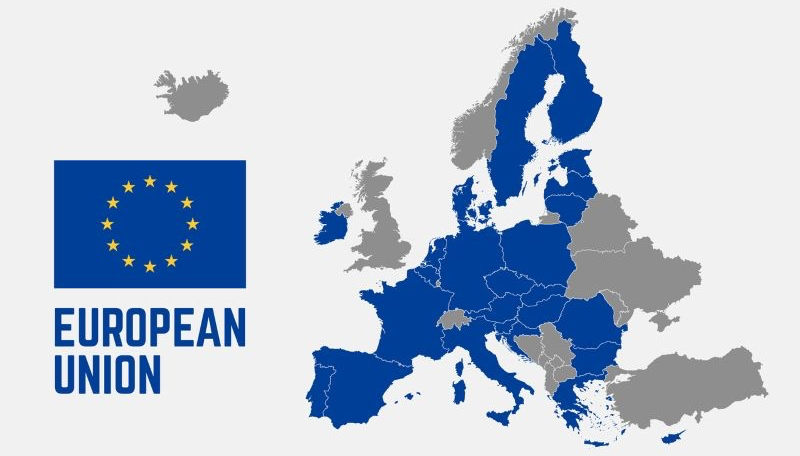
A central feature of the report is its discussion of measures adopted by Member States pursuant to Article 4(3) of Regulation (EU) 2021/821. Under that provision, Member States may impose authorization requirements on exports of non-listed dual-use items where exporters have grounds for suspecting that such items may be intended for certain sensitive end uses identified under the Regulation. The Commission’s report demonstrates that a substantial number of Member States have adopted national legislation authorizing such controls, while others have not implemented comparable measures. Specifically, the report identifies Belgium, Bulgaria, the Czech Republic, Denmark, Ireland, Croatia, Italy, Latvia, Lithuania, Luxembourg, Hungary, Austria, Romania, Slovenia, Finland, and Sweden as having adopted national legislation imposing authorization requirements pursuant to Article 4(3). By contrast, Germany, Estonia, Greece, Spain, France, Cyprus, Malta, the Netherlands, Poland, Portugal, and Slovakia are identified as not having implemented equivalent national legislation in this area. The practical significance of this divergence should not be understated. Although Regulation (EU) 2021/821 establishes a harmonized EU framework governing dual-use exports, the report illustrates that exporters operating across multiple Member States may nevertheless encounter materially different authorization obligations depending upon the jurisdiction from which exports occur.
The Information Note further reflects the increasing importance of catch-all style controls involving non-listed items. Several Member States expressly provide that exports of dual-use items not listed in Annex I of the Regulation may nevertheless be subject to authorization requirements or prohibitions for reasons tied to public security or human rights considerations. Austria, Slovenia, and Sweden are specifically identified in this regard, while Finland’s framework similarly permits authorization requirements involving non-listed items where such items are or may be intended for uses that significantly endanger public security or Finland’s national security interests. These measures are particularly significant because they reinforce that export compliance analysis within the European Union is increasingly extending beyond conventional classification exercises focused solely on Annex I coverage. In practice, exporters are increasingly expected to evaluate not merely whether a product appears on a control list, but also how the item may ultimately be used, who the end user may be, whether diversion risks exist, and whether broader national security or public policy concerns may be implicated by the transaction. As these national measures continue to expand, exporters relying exclusively on classification-based compliance methodologies may find themselves inadequately positioned to identify emerging licensing risks associated with non-listed items.
The report is also notable for its discussion of national controls involving advanced semiconductor manufacturing equipment, an area that continues to occupy a central role in global export control policy. The Netherlands, for example, has adopted authorization requirements applicable to the export of advanced semiconductor manufacturing equipment pursuant to national measures identified in the report. The document additionally references national controls involving exports of certain chemical substances to Iraq regardless of consignee or end user, as well as controls relating to items for internal repression destined for Syria, Egypt, and Ukraine. Collectively, these measures illustrate the extent to which Member States continue to utilize national authorities to supplement the broader EU dual-use framework in areas viewed as strategically sensitive or otherwise implicating broader public security concerns. At the same time, the prominence given to semiconductor manufacturing equipment reflects the increasingly important role that advanced technology controls continue to occupy within modern export control systems more generally. Although the report itself remains technical and administrative in tone, the underlying policy direction reflected in these measures is difficult to ignore.

Another important aspect of the report is the degree to which it reflects the growing administrative sophistication and institutionalization of export control implementation across the European Union. The document contains extensive information identifying competent national authorities responsible not only for export authorizations, but also for brokering controls, technical assistance controls, transit controls, and strategic goods oversight more broadly. In many instances, the report identifies multiple agencies or authorities within a single Member State tasked with administering distinct aspects of export control regulation. The breadth and complexity of these institutional frameworks reflect the increasingly operationally significant role that export controls now occupy within European regulatory systems. They also underscore the reality that export control compliance within the European Union increasingly requires familiarity not only with the text of Regulation (EU) 2021/821 itself, but also with the national administrative structures, implementing measures, licensing practices, and competent authorities operating within individual Member States.
From a practical perspective, the report underscores that exporters operating within the European Union can no longer focus exclusively on Annex I classifications when evaluating export control obligations. Increasingly, exporters must also consider national level controls, catch-all authorization requirements, end-use concerns, jurisdiction-specific implementation measures, and the possibility that non-listed items may nevertheless become subject to authorization requirements depending upon transaction context. The result is a regulatory environment that is becoming progressively more nuanced and, in certain respects, less harmonized than many companies may traditionally associate with EU export controls. For multinational organizations conducting exports across several EU jurisdictions, these developments create heightened importance for centralized compliance coordination, careful jurisdictional analysis, transaction-level diligence, and escalation procedures capable of identifying when national controls may apply notwithstanding the absence of a specific Annex I classification.
Ultimately, the Commission’s Information Note reflects a broader structural evolution in European export controls toward a more expansive and context driven regulatory environment. The increasing reliance on national authorization regimes, controls involving non-listed items, enhanced scrutiny of strategically sensitive technologies, and broader transaction-based analysis collectively suggest that export controls within the European Union are continuing to develop beyond a purely list-based framework centered exclusively on enumerated controlled items. For exporters and compliance professionals alike, these developments reinforce the importance of maintaining export compliance programs capable of evaluating not only product classifications, but also national implementation measures, end-use considerations, customer and intermediary risk factors, and the increasingly complex regulatory landscape emerging across EU Member States.