DOJ Announces New West Coast Health Care Fraud Strike Force
The Department of Justice (“DOJ”) continues to expand its aggressive health care fraud enforcement efforts with the announcement of a new West Coast Health Care Fraud Strike Force. The initiative reflects DOJ’s ongoing commitment to coordinated, data-driven enforcement targeting fraud schemes involving federal health care programs, telemedicine, kickbacks, billing fraud, and emerging technology-enabled misconduct.
The creation of the new Strike Force underscores several important trends: continued prioritization of health care fraud enforcement, increased reliance on data analytics and artificial intelligence, growing scrutiny of telemedicine and digital health companies, and heightened oversight of private equity-backed health care entities.
The Strike Force Model
DOJ’s Health Care Fraud Strike Force model combines:
- Federal prosecutors;
- FBI agents;
- HHS-OIG investigators;
- CMS personnel;
- Data analysts; and
- State and local law enforcement.
The Strike Forces use sophisticated analytics to identify suspicious billing trends, referral schemes, and abnormal utilization patterns.
The program has generated billions of dollars in recoveries and thousands of criminal prosecutions involving Medicare, Medicaid, kickback arrangements, laboratory testing fraud, telemedicine schemes, and opioid-related misconduct.
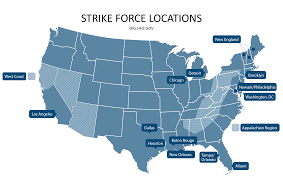
Why the West Coast Expansion Matters
The West Coast presents a particularly attractive enforcement environment because of:
- Rapid telemedicine growth;
- Large concentrations of digital health companies;
- Significant Medicare and Medicaid expenditures;
- Increased private equity investment in health care;
- Expanding AI-enabled billing systems; and
- High levels of pharmaceutical and medical device activity.
DOJ appears increasingly focused on sophisticated, technology-enabled fraud schemes that can scale rapidly across multiple jurisdictions.
AI and Data-Driven Enforcement
Modern Strike Force investigations increasingly rely on:
- Predictive billing analytics;
- Claims anomaly detection;
- Provider relationship mapping;
- Referral pattern analysis; and
- Prescription utilization monitoring.
Regulators can now identify suspicious reimbursement activity much faster and more effectively than in prior years.
Compliance Lessons
Health care organizations should:
- Strengthen billing audits and monitoring systems;
- Enhance telehealth compliance controls;
- Conduct rigorous third-party due diligence;
- Improve internal investigations capabilities;
- Ensure active board oversight; and
- Continuously monitor coding and utilization trends.

Conclusion
The new West Coast Health Care Fraud Strike Force reflects DOJ’s continuing investment in sophisticated, technology-driven health care enforcement.
Health care organizations should expect increasingly aggressive investigations involving telemedicine, digital health, billing practices, private equity-backed operations, and AI-enabled fraud detection systems.
Organizations that proactively strengthen compliance infrastructure and governance systems will be better positioned to manage escalating enforcement risks.