From Executive Director to Convicted Felon: The Goldman Sachs Banker Who Bribed His Way to a Ghanaian Power Deal
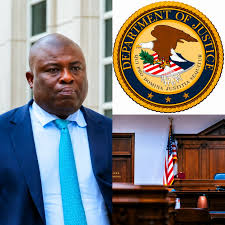
A federal jury sitting in Brooklyn has convicted Asante Kwaku Berko, a dual U.S.-Ghanaian citizen and former Executive Director in Goldman Sachs’ Investment Banking Division, on charges of conspiracy to violate the Foreign Corrupt Practices Act, a substantive FCPA violation, and money laundering conspiracy, following a nine-day trial. Berko later went on to serve as Managing Director of Tema Oil Refinery, one of Ghana’s major state-owned petroleum institutions, a role that has amplified attention on the case within Ghana itself, where it has become a prominent story about the intersection of foreign investment, public institutions, and government decision-making. The case is a textbook illustration of how a single insider, with genuine access and genuine trust inside a major financial institution, can turn a legitimate cross-border deal into a bribery scheme, and how thoroughly that scheme can unravel once investigators start pulling on the thread.
A Power Deal Amid a National Energy Crisis
Beginning in December 2014, Berko was responsible for managing a deal between Aksa Enerji, a Turkish energy company and Goldman Sachs client, and the government of Ghana for the construction and financing of a power plant, at a moment when Ghana was in the midst of a serious national energy crisis and the project carried significant political and financial stakes. The plant itself was expected to generate hundreds of millions of dollars in revenue, which made securing the government approvals needed to win the bid an enormously valuable prize, and according to the evidence at trial, Berko and his co-conspirators decided the fastest way to secure that prize was to pay for it.
The Mechanics of the Scheme
According to court documents and trial evidence, Berko and his co-conspirators paid, and conspired to pay, more than $1 million in bribes to Ghanaian government officials at multiple levels to ensure the Turkish company won the bid to build and operate the plant. In April 2015, the conspirators discussed paying $1 million to Ghana’s Minister of Power, the official responsible for the key approvals that would allow the project to move forward. Separately, during an all-expenses-paid trip to Turkey ostensibly organized so Ghanaian officials could inspect equipment for the power plant, five officials each received $5,000 in cash. After Ghana’s parliament ratified the power plant deal in July 2015, Berko and his co-conspirators exchanged detailed emails discussing their bribe payments, evidence that ultimately became part of the government’s trial record, along with proof of tens of thousands of dollars in bribes Berko had personally paid, and additional amounts he was still owed by his co-conspirators.
One detail from the trial has drawn particular attention: prosecutors told the jury that Berko and his co-conspirators used the coded phrase “holy rain” in their communications to refer to the bribe payments themselves, with at least one official described as impatiently waiting for that “holy rain” to arrive. It is a small detail, but it is also a familiar one in bribery cases. Conspirators rarely write the word “bribe” in an email or a text message. They develop euphemisms, code words, and shorthand that feel innocuous on their face but that investigators, once they understand the context, can trace directly back to specific payments, specific officials, and specific approvals. That gap between how a scheme is described internally and what it actually is turns out to be exactly the kind of evidence that makes a bribery case at trial.
How Berko Concealed the Scheme From His Own Employer
Perhaps the most instructive part of this case for compliance officers is how Berko managed to keep the scheme hidden from Goldman Sachs for as long as he did. He lied directly to the firm’s compliance team, the group specifically responsible for vetting the legitimacy of the deal, and he deliberately routed his communications about the bribes through a personal, non-business email account rather than his corporate account, removing the conversations from the systems his employer’s compliance function would have had visibility into. He and his co-conspirators laundered the bribe payments using shell companies, sham invoices, nominee account holders, and cash withdrawals, moving funds through both U.S. and foreign bank accounts, including accounts held in Berko’s own name. Goldman Sachs ultimately withdrew from the deal once corruption concerns surfaced, a decision that likely limited the firm’s own exposure but did nothing to stop the scheme that had already been set in motion by one of its own senior bankers. Notably, Goldman Sachs itself was not charged in connection with the scheme and cooperated with the government’s investigation, underscoring that the misconduct here was framed by prosecutors as the work of Berko and his co-conspirators operating outside the boundaries of his employment, not as an institutional failure attributable to the firm.
An International Investigation and Extradition
Bringing Berko to trial required substantial international cooperation. The FBI’s Law Enforcement Attaché in Accra worked alongside Ghana’s Office of the Attorney-General and Ghana’s Office of the Special Prosecutor to support the investigation, while securing Berko’s arrest and extradition required assistance from the UK’s National Extradition Unit, the Crown Prosecution Service of England and Wales, and the U.S. Embassy in London, coordinated through the Justice Department’s Office of International Affairs and the U.S. Marshals Service. That level of cross-border coordination reflects how seriously the government pursued this case, and it underscores that FCPA defendants increasingly cannot rely on geography to place themselves beyond the reach of U.S. prosecutors.
Berko was convicted on all three counts and was ordered remanded pending sentencing, which is scheduled for November 10. He faces a maximum penalty of 30 years in prison, with the final sentence to be determined based on the U.S. Sentencing Guidelines and other statutory factors.
Why This Case Matters for Financial Institutions
This case is a sharp reminder that FCPA risk at a major financial institution does not always originate with a rogue overseas agent or a poorly vetted third-party intermediary. Sometimes it originates with a senior employee who has direct, legitimate access to the deal, the client relationship, and the foreign government counterparts involved, and who uses that access and trust to defeat the very compliance controls meant to catch this kind of conduct. Berko did not need an external intermediary to launder his intentions past Goldman’s compliance function; he simply lied to it directly and moved his real communications off the firm’s own systems.
That should push financial institutions and other multinational companies to think carefully about a few specific control gaps. Deal teams working on high-value transactions in higher-risk jurisdictions need monitoring and escalation mechanisms that do not depend entirely on the honesty of the banker or executive closest to the deal. Communications policies need real enforcement mechanisms, not just written prohibitions, against routing business-related conversations through personal email accounts, particularly on deals flagged as higher risk during initial vetting. And compliance teams tasked with vetting a deal need independent means of verifying the representations made to them, rather than relying solely on the deal team’s own account of how a transaction is proceeding.
The “holy rain” detail is worth its own line item on that list. Coded language is a recurring feature of bribery schemes precisely because it is designed to look innocuous to anyone who isn’t already in on the scheme, which means conventional keyword-based communications surveillance, built around obvious terms like “bribe,” “kickback,” or “commission,” will typically miss it entirely. Effective monitoring in high-risk deal environments has to account for the fact that the most incriminating language in a bribery scheme often will not sound incriminating at all, and needs to combine communications review with a broader pattern of behavioral red flags, unusual urgency around a specific official’s approval, unexplained travel or gifts, or informal payment requests, rather than relying on any single message to give the scheme away. Goldman Sachs’ decision to withdraw from the deal once concerns surfaced was the right one, and it likely limited the firm’s own institutional exposure in this matter. But the case is a reminder that withdrawal after the fact is a last line of defense, not a substitute for controls capable of catching this kind of insider deception before over a million dollars in bribes had already been paid.