L3Harris Ousts Kubasik Over Code-of-Conduct Violation: The Board Governance Lesson Nobody Wants to Learn Twice

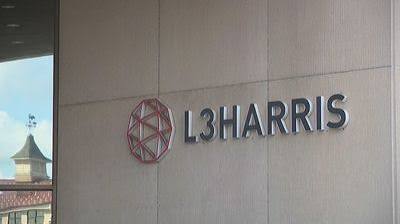
L3Harris Technologies parted ways with its chairman and CEO, Christopher Kubasik, after an internal investigation determined he had violated the company’s code of conduct. The company hasn’t detailed the specific conduct at issue, and it went out of its way to state that the departure had nothing to do with financial reporting or operational performance. The market reacted anyway: L3Harris shares dropped nearly 5 percent on the news. What makes this story worth a closer look isn’t just the ouster itself. It’s that this is not Kubasik’s first exit under a cloud. More than a decade ago, he resigned as Lockheed Martin’s CEO-elect after the company disclosed he had engaged in what it described as a lengthy, close personal relationship with a subordinate, a departure that came with a $3.5 million separation payment.
A Pattern That Isn’t Unique to One Executive
Kubasik’s trajectory fits a recognizable pattern in corporate leadership, and he’s far from alone in it. Brian Krzanich resigned as Intel’s CEO in 2018 after the company found he’d had a prior consensual relationship with a co-worker, a violation of Intel’s nonfraternization policy. Krzanich went on to lead CDK Global, and today he serves as CEO of Cerence, a publicly traded AI company. Mark Hurd left Hewlett-Packard in 2010 following misconduct allegations tied to a relationship with a contractor, and expense reports the company said were falsified to conceal it. Hurd resurfaced soon after as an executive at Oracle, eventually rising to co-CEO before his death in 2019.
The common thread across these cases is not that boards are unaware of an executive’s history. It’s that boards, weighing a candidate’s track record against a limited pool of people with the right industry experience, sometimes conclude the risk is manageable. Sometimes that bet pays off. Sometimes, as L3Harris just discovered, it doesn’t.
Why Boards Make This Bet in the First Place
There’s a real distinction that governance experts and executive recruiters draw here, and it explains why this pattern keeps recurring. Boards generally treat two categories of executive misconduct very differently. Conduct involving a workplace relationship, viewed in isolation, tends to be treated by many boards as what one employment law expert has described as a relatively ordinary governance issue, one that draws a warning rather than a permanent disqualification. What genuinely alarms boards is a different category of risk entirely: conduct that caused or reflects business malfeasance, financial harm, or reputational damage to the company. In other words, boards aren’t necessarily reacting to the behavior itself. They’re reacting to whether that behavior created what amounts to enterprise risk for the business they’re being asked to run.

That distinction is exactly why executives with a documented history of a code-of-conduct violation involving a personal relationship can still find their way back into corporate leadership relatively quickly, sometimes within a couple of years. Boards conducting search processes reason that a past violation of this particular type doesn’t necessarily predict future business judgment, and in an industry with a genuinely narrow bench of qualified candidates, that reasoning can tip the scales toward hiring anyway.
Where the Bet Falls Apart
The problem with this reasoning, and the reason L3Harris’s stock dropped nearly 5 percent on Monday’s news, is that separating an executive’s personal conduct from their professional judgment turns out to be much harder in practice than in theory. As one longtime executive recruiter put it, boards trying to make these calls will look past certain issues, but ultimately you can’t fully divorce someone’s personal conduct from their professional capacity. A pattern of policy violations, even ones a board initially categorized as low enterprise risk, tends to say something about how an individual exercises judgment more broadly, and that judgment is precisely what a board is being asked to bet the company’s leadership on.
There’s also a market reality that boards sometimes underweight when they make these hiring decisions: investors don’t necessarily share the board’s comfort level with prior conduct issues, and an unexplained, abrupt departure of a chairman and CEO creates its own reputational and confidence problem regardless of how the underlying conduct is ultimately categorized. L3Harris’s insistence that the departure wasn’t related to financial reporting or operations didn’t stop the stock from falling. Markets tend to price in uncertainty first and ask nuanced questions about categorization later.
The Governance Lesson for Boards
This case offers a genuinely useful governance lesson, and it isn’t “never hire an executive with a prior conduct issue.” It’s that thorough background vetting has to translate into an actual, documented risk assessment and mitigation plan, not just a pass/fail screening exercise. Some boards go to considerable lengths in this vetting process, calling former managers and colleagues across decades of an executive’s career to surface prior issues before extending an offer. But diligence alone doesn’t eliminate risk; it just informs the decision about how to manage it. Boards that decide to proceed despite a known history need enhanced, ongoing oversight mechanisms specifically calibrated to the risk they’ve identified, not just a one-time judgment call made during the search process and then forgotten.
The recurring nature of this pattern across multiple companies and executives should also prompt boards to ask a harder question during CEO searches: is a documented violation truly an isolated incident, or is it the visible instance of a broader pattern in how this individual exercises judgment under pressure or when personal interests conflict with organizational obligations? Those are very different risk profiles, and treating every instance as automatically low-risk because it falls into a familiar “personal relationship” category, without probing further, is exactly the kind of assumption that leaves a board exposed when history repeats itself.
The Bottom Line
L3Harris’s abrupt CEO exit is a reminder that a prior code-of-conduct violation doesn’t disqualify someone from future leadership roles in the eyes of many boards, and recent corporate history is full of examples of executives who moved on to lead other companies after similar issues. But it’s also a reminder that boards who extend that second chance are making a genuine bet on future judgment, not just resolving a historical footnote, and that bet needs the same rigor, ongoing monitoring, and enterprise risk framing that any other material governance decision deserves. As one executive recruiter aptly put it, history has a way of repeating itself. Boards making CEO hiring decisions involving a known conduct history should plan accordingly, not just at the point of hire, but for as long as that executive holds the job.