OFAC and OFSI Send a Clear Message: The Atlantic Ocean Is No Longer an Enforcement Barrier
“However beautiful the strategy, you should occasionally look at the results.” — Winston Churchill
For years, multinational companies have been hyper-focused on OFAC sanctions compliance. The UK sanctions regime was relatively quiet in impact until the global Russian sanctions hit. Now, the world has changed in many respects in the sanctions arena.
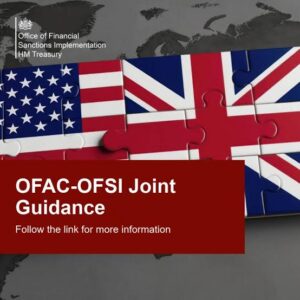
Last week, the U.S. Treasury Department’s Office of Foreign Assets Control (OFAC) and the UK’s Office of Financial Sanctions Implementation (OFSI) released a joint comparative overview of their respective sanctions regimes. At first glance, the document appears to be nothing more than a helpful side-by-side comparison of sanctions terminology, licensing, reporting obligations, enforcement authorities, and compliance requirements.
Look closer.
The real message isn’t about terminology. It’s about coordination. The Atlantic Ocean still separates Washington and London. Increasingly, it no longer separates sanctions enforcement.
Why This Matters
- OFAC and OFSI are continuing to deepen their enforcement partnership.
- Multinational companies should build one integrated global sanctions compliance program—not separate U.S. and UK programs.
- Regulators increasingly expect organizations to understand both the similarities and the important differences between the two regimes.
The guidance itself is the latest product of the OFAC-OFSI Enhanced Partnership announced in 2022. Rather than issuing separate guidance documents, the agencies jointly explain where their regulatory frameworks align and where they diverge. That is more than an educational exercise—it reflects an ongoing commitment to closer cooperation between two of the world’s most influential sanctions authorities.
This trend should not surprise anyone.
Sanctions enforcement has become increasingly multinational. Supply chains cross borders. Financial transactions move through multiple jurisdictions. Third parties routinely operate across continents. It makes little sense for companies to manage sanctions risks in isolated compliance silos when regulators themselves are working more closely together.
The guidance identifies many similarities between the two systems. Both agencies administer sanctions designed to advance national security and foreign policy objectives. Both rely on strict liability standards for civil enforcement. Both encourage voluntary self-disclosures. Both issue general and specific licenses to authorize otherwise prohibited activity. Both expect companies to maintain effective compliance programs supported by accurate recordkeeping and timely reporting.
At the same time, the agencies remind companies that important differences remain. OFAC speaks of “blocking” property while OFSI refers to “freezing” assets. OFAC’s reporting obligations differ from OFSI’s. Licensing procedures vary. Ownership and control analyses are not identical. Those differences matter because they can produce very different compliance outcomes for the same transaction.
For compliance professionals, however, the biggest lesson is organizational rather than legal.
Companies should stop asking: “Do we have an OFAC compliance program?”
Instead, they should ask: “Do we have a global sanctions compliance program capable of satisfying multiple regulators?”
That requires more than screening software. An effective program requires policies and procedures, cross-border communication, risk assessments, and of course, leadership.
Five Practical Takeaways
1. Think globally. Build sanctions compliance programs that operate across jurisdictions rather than country-by-country.
2. Harmonize your policies. Different regulators may have different rules, but your internal governance should promote consistency.
3. Invest in training. Employees managing international transactions should understand where OFAC and OFSI requirements overlap—and where they do not.
4. Review your reporting procedures. Different reporting obligations can create unexpected compliance gaps.
5. Expect greater regulatory coordination. The guidance reflects an enforcement environment in which international cooperation is becoming the rule rather than the exception.
Volkov’s Bottom Line
The most important message in the OFAC-OFSI guidance isn’t found in any single comparison chart.
It’s the document itself.
When two leading sanctions regulators publish joint guidance explaining their respective systems, they are sending a clear signal to the private sector: coordinated enforcement is here to stay.
Companies should respond accordingly by moving beyond fragmented compliance programs and embracing integrated, enterprise-wide sanctions risk management. Organizations that view sanctions compliance as a strategic business function—rather than a series of disconnected legal requirements—will be far better positioned to navigate today’s increasingly complex global regulatory environment.
Next: We’ll take a closer look at five important differences between OFAC and OFSI that every multinational company should understand before the next cross-border transaction—not after the next enforcement inquiry.