Also This Month: Syria Opens Up, Canada Gets Tariffed, and Congress Passes a New Russia Sanctions Law
Operation Economic Outcast has rightly drawn the most attention this month, and we’ve given it the two-part deep dive it deserves. But it wasn’t the only major economic-policy development in the same 30-day window. Three other stories are worth a quick roundup, because together they show just how many directions U.S. economic policy is pulling in at once right now: Syria, pursuing more sanctions relief than it’s seen in nearly five decades; Canada, one of America’s closest allies, suddenly in a real tariff fight with Washington; and a sweeping new Russia sanctions statute that just became law.
Syria: The Last Major Restriction Comes Off
While Iran sanctions were tightening dramatically, the administration took its biggest step yet toward normalizing relations with Syria’s post-Assad government. The State Department rescinded Syria’s designation as a State Sponsor of Terrorism, a status the country had carried for nearly 47 years. That single move lifts statutory restrictions on foreign assistance and related financial dealings, and clears the way for both the Commerce Department and the State Department to relax export controls on civilian and defense-related items.
The same announcement removed Hay’at Tahrir al-Sham from the Specially Designated Global Terrorist list and the SDN list entirely, waived remaining statutory bars on defense exports to Syria, and signaled forthcoming amendments to the export control regulations, including scrapping the standing policy of denial that had applied to Syria for years.
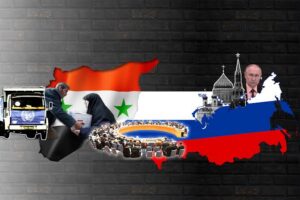
This is the capstone on a process that’s been building since mid-2025: termination of the underlying national emergency, delisting of Syria’s president and interior minister, and repeal of the mandatory secondary sanctions statute late last year. The message is clear that the administration wants global business genuinely re-engaged with Syria. The caveat is equally important: comprehensive relief doesn’t eliminate list-based risk tied to specific parties still operating in the country, and the new government hasn’t fully consolidated control. Treat this as a real opening, not a green light for unconditional engagement.
Canada: An Unexpected Trade War
The more surprising story is Canada. In July, the U.S. declined to renew the USMCA in its current form, opting for annual reviews instead of a fixed extension. Talks collapsed in late August when Canada’s prime minister walked away, calling U.S. demands unfair. Within days, Washington imposed an additional 50 percent tariff on roughly $20 billion of Canadian goods under a statute that had essentially never been used before this year. Canada hit back with matching tariffs covering steel, dairy, appliances, agricultural equipment, and electronics, and the U.S. has since signaled it may convert some of this into outright import bans on specific Canadian products like motorcycles and alcohol. Canada, notably, has reportedly explored some kind of associate relationship with the European Union.
The compliance lesson here is straightforward but easy to miss: trade risk is no longer confined to adversarial-nation relationships. Canadian counterparty relationships that would have registered as essentially risk-free a year ago now need active monitoring for tariff exposure and retaliation risk.
The Graham Act Becomes Law
Finally, Congress passed the Lindsey O. Graham Sanctioning Russia and Iran Act, signed into law on September 18. It codifies existing Russia sanctions, requires blocking foreign vessels that knowingly transport Russian energy along with anyone supporting them, and bars new U.S. investment in Russia. The most novel piece is its tariff structure: up to 500 percent primary tariffs on Russian goods, and up to 100 percent secondary tariffs on the top five countries importing Russian oil and gas or facilitating sanctions evasion, aimed squarely at China, India, and Turkey. A carve-out for countries under 15 percent Russian gas dependence that are actively reducing it gives the administration room to exempt cooperating European countries, echoing a similar mechanism from a 2012 Iran oil statute. The president retains a 30-day renewable waiver tied to a national-interest certification, and the act includes a termination clause tied to a future Ukraine peace agreement, plus a five-year renewal of the separate Iran Sanctions Act of 1996, pushing its expiration to 2031.
The Common Thread
Read individually, these are three unrelated stories. Read together with Operation Economic Outcast, they describe an administration using every available economic tool, tariffs, sanctions, export controls, investment restrictions, more aggressively and across more simultaneous fronts than at any point in recent memory. A company with global operations could be facing tightening Iran exposure, genuine Syria opportunity, Canadian tariff volatility, and new Russia secondary tariff risk all within the same compliance cycle. That argues for treating geopolitical risk assessment as a continuous function this quarter, not a periodic exercise.