Congress Sends a Major New Russia and Iran Sanctions Bill to the President: What Compliance Teams Need to Know

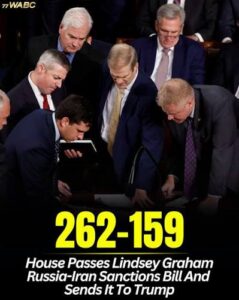
The House of Representatives voted 262 to 159 on the night of September 16 to approve a sweeping Russia and Iran sanctions bill, sending it to President Trump for his expected signature. The legislation, renamed the Lindsey O. Graham Sanctioning Russia and Iran Act after the late South Carolina senator who championed it for more than a year before his death in July, cleared the Senate by an 86-11 vote back in August. Once signed, this will be one of the most consequential pieces of Russia-related sanctions legislation to reach a president’s desk since the invasion of Ukraine began, and it carries real, near-term implications for companies in energy, shipping, financial services, and any business with counterparties touching Russian or Chinese trade.
The Political Debate Behind the Bill
The legislation’s path to passage reflects a genuine, substantive disagreement about how sanctions authority should actually be structured, not just a partisan formality. Rep. Michael McCaul, chairman emeritus of the House Foreign Affairs Committee, argued the bill is necessary to force a change in Russian President Vladimir Putin’s calculation about the war in Ukraine, stating that the goal is to “bleed his regime economically dry” because Putin currently believes he can finance the war indefinitely. Foreign Affairs Committee Chairman Brian Mast specifically defended the bill’s provisions targeting China, arguing that a country supplying drone components and other materials to Russia’s defense industry, while also serving as one of Russia’s largest energy customers, shouldn’t simultaneously expect unimpeded access to Western markets.
The most substantive opposition came from Foreign Affairs Committee ranking member Gregory Meeks, who said he “regrettably” opposed the bill, not over its substantive sanctions targets, but over concerns about how much discretion the legislation gives the president to waive its provisions. Meeks sought to offer an amendment that would have made those sanctions harder to waive, but the Republican-led House Rules Committee blocked it before floor debate. Meeks argued for delaying the vote until improvements could be negotiated, asking directly whether the administration’s track record gave Congress confidence it would “suddenly get serious about punishing Russia.” Despite that objection, roughly a quarter of House Democrats voted for the bill anyway; Rep. Eugene Vindman said the legislation, while imperfect, represented a vital step toward ending the war and supporting Ukraine, adding that if the administration doesn’t implement it as Congress intended, Democrats would pursue accountability in a future Congress.
What the Bill Actually Does
Setting the political debate aside, the substantive provisions are extensive and touch multiple sectors simultaneously. The legislation authorizes sanctions against a broad range of actors: senior Russian government officials, entities and individuals supporting Russia’s government and energy production sector, Russian financial institutions, vessels comprising Russia’s so-called shadow fleet of oil tankers, and Chinese entities supporting Russia’s defense industrial base. That last category is a meaningful expansion of the sanctions architecture beyond Russia itself, explicitly reaching Chinese suppliers implicated in supporting Russian military production.
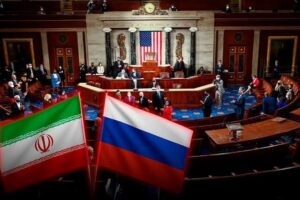
Beyond direct sanctions designations, the bill also imposes tariffs, a notably different enforcement mechanism than a traditional sanctions designation, on the top purchasing countries of Russian oil and natural gas, and on the leading facilitators of Russian sanctions evasion schemes. Pairing tariff authority with sanctions designations gives the administration two distinct enforcement tools operating on different legal bases, which matters for compliance planning because a counterparty or country could face exposure under either mechanism independently.

The legislation separately extends the Iran Sanctions Act of 1996 for five years. That law was set to expire and restricts funding flowing to Iran’s energy and weapons sectors; without this extension, a significant piece of the existing Iran sanctions architecture would have lapsed.
Why the Shadow Fleet Provisions May Matter Most
Senate Foreign Relations Committee ranking member Jeanne Shaheen made a case in a Dear Colleague letter ahead of the House vote that deserves particular attention from compliance officers in the energy and shipping sectors. Shaheen said she and her staff had heard directly from foreign governments that the bill’s provisions targeting Russia’s shadow fleet would cause foreign energy companies to stop purchasing Russian oil immediately, not gradually and not waiting for the sanctions to actually take effect through formal implementation. Her point was that the mere exposure to potential secondary sanctions liability is often sufficient on its own to change commercial behavior, well before enforcement actually occurs. Shaheen cited an estimated $100 billion in annual Russian revenue tied to shadow fleet oil sales, meaning the shadow fleet provisions alone carry outsized practical significance relative to their portion of the bill’s overall text.
The Waiver Authority Question
The central point of contention that Meeks raised, and that Vindman implicitly acknowledged in his own statement, is worth flagging clearly for compliance teams: the bill reportedly gives the president meaningful discretion to waive its sanctions provisions. That detail matters enormously for how companies should plan around this legislation. A sanctions statute with broad presidential waiver authority creates a materially different compliance posture than one with rigid, non-waivable triggers, because the actual scope and timing of enforcement can shift based on executive decisions made after enactment, not just based on the statutory text itself. Companies operating in the sectors this bill targets should not assume that the legislation’s provisions will apply on a fixed, predictable timeline; the waiver authority built into the bill means the administration retains real discretion over implementation, and that discretion is precisely what generated the most substantive legislative opposition to the bill.
A Related Bill Still in the Pipeline
House Financial Services Committee Chairman French Hill signaled that this legislation, while worth supporting despite what he called its “shortcomings,” should be paired with additional action. He specifically urged the House to also pass the Peace Act, separate legislation that would expand Treasury Department authority to prohibit foreign financial institutions from accessing the U.S. banking system if those institutions serve Russia’s energy sector or other sanctioned Russian entities. Compliance teams tracking this legislation should watch for parallel movement on that bill as well, since it would add a distinct financial-institution access mechanism on top of the sanctions and tariff authorities in the Graham Act.
What Compliance Programs Should Do Now
Given that this bill is headed to the president’s desk with an expected signature, companies with any exposure to Russian energy, shipping, or financial counterparties, or with Chinese suppliers connected to defense-adjacent manufacturing, should treat the legislation as imminent rather than speculative. Energy and shipping companies with any counterparty relationships touching Russian oil transport should reassess those relationships now, given Shaheen’s point that commercial behavior is likely to shift immediately upon signature rather than waiting for formal regulatory implementation. Companies with Chinese suppliers in defense-adjacent or dual-use manufacturing categories should conduct enhanced due diligence given the bill’s explicit targeting of Chinese entities supporting Russia’s defense industrial base. And because the bill’s ultimate scope and enforcement timeline depend significantly on how the administration exercises its waiver authority, compliance teams should build monitoring processes to track implementing regulations and any waiver determinations closely, rather than relying solely on the statutory text to predict actual enforcement exposure.
Summary of Key Bill Provisions and Changes
Bill Name: Lindsey O. Graham Sanctioning Russia and Iran Act (formerly known by other working titles before being renamed after the late Sen. Lindsey Graham)
Status: Passed House 262-159 on September 16, 2026; passed Senate 86-11 in August 2026; headed to President Trump for expected signature.
Sanctions Designations Authorized:
- Senior Russian government officials
- Entities and individuals supporting Russia’s government and energy production sector
- Russian financial institutions
- Vessels comprising Russia’s “shadow fleet” of oil tankers
- Chinese entities supporting Russia’s defense industrial base
Tariff Authority:
- Tariffs on the top purchasing countries of Russian oil and natural gas
- Tariffs on the leading facilitators of Russian sanctions evasion
Iran Sanctions Act Extension:
- Extends the Iran Sanctions Act of 1996 for five years, preserving restrictions on funding for Iran’s energy and weapons sectors that were set to expire
Key Structural Feature:
- Bill reportedly includes meaningful presidential waiver authority over its sanctions provisions, which was the central point of objection from Democratic critics who sought (unsuccessfully) to amend the bill to make sanctions harder to waive
Related, Separate Legislation Referenced:
- The Peace Act (not part of this bill): would expand Treasury Department authority to prohibit U.S. banking system access for foreign financial institutions serving Russia’s energy sector or sanctioned Russian entities; House Financial Services Committee Chairman French Hill urged passage of this as a companion measure
Estimated Economic Impact Cited:
- Sen. Jeanne Shaheen estimated Russia’s shadow fleet generates approximately $100 billion annually in oil revenue, and argued the bill’s shadow fleet provisions alone could immediately deter foreign energy companies from purchasing Russian oil due to sanctions exposure risk, independent of formal implementation timing