Inside Operation Economic Outcast, Part 1: The Sectoral Expansion and the General License Purge
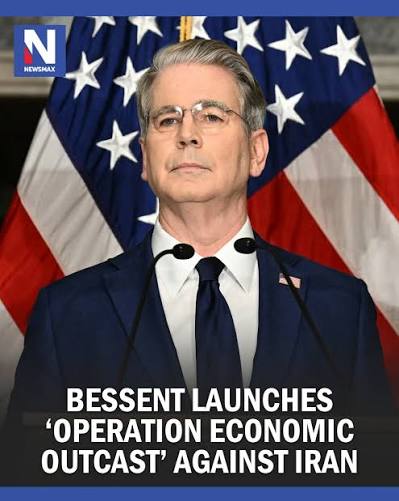
Treasury’s Operation Economic Outcast is the most consequential sanctions development of the year, and it deserves more than a passing mention in a broader roundup. This is Part 1 of a focused, two-part deep dive on the campaign. Here, we cover the two pieces of Operation Economic Outcast that create the most immediate, concrete compliance obligations: the expansion of Iran sectoral sanctions to five new industries, and the wholesale suspension of general licenses that had authorized specific categories of Iran-related activity for years. Part 2 will cover the Strait of Hormuz guidance and the string of bank-targeting actions Treasury has used to squeeze Iran’s remaining access to the global financial system.
A Reversal, Not a Continuation
Understanding why Operation Economic Outcast matters requires understanding what it reversed. In June 2026, the U.S. and Iran signed a memorandum of understanding contemplating the termination of sanctions and the release of restricted Iranian assets, a genuine diplomatic opening. That negotiating window lapsed without a deal. In July, OFAC revoked the general license that had implemented the MOU’s initial oil-sector relief and replaced it with an order mandating immediate wind-down of the transactions that license had authorized. Operation Economic Outcast, launched in late August, is Treasury’s follow-through on that reversal: an explicit, whole-of-government campaign to close every remaining financial channel available to the Iranian regime and the Islamic Revolutionary Guard Corps, with third countries told directly they face a choice between cooperating with U.S. policy or facing isolation alongside Iran. Compliance officers who had begun relaxing Iran-related screening in anticipation of détente need to reverse that posture immediately; the direction of travel has fully inverted.
Five New Sectors, Zero U.S. Nexus Required
The single most important legal development inside Operation Economic Outcast is OFAC’s determination expanding Executive Order 13902 to cover five additional sectors of the Iranian economy: aviation, digital assets, gold, shipping, and technology. These join sectors already covered under the same authority: financial services, petroleum, petrochemicals, construction, mining, manufacturing, and textiles. Iran’s economy now has remarkably few corners left untouched by this authority.
Executive Order 13902 lets OFAC designate any person, anywhere in the world, who operates in a covered sector or knowingly engages in a significant transaction involving the sale, supply, or transfer of significant goods or services connected to that sector, to or from Iran. A separate, parallel provision targets foreign financial institutions: any institution that knowingly facilitates a significant financial transaction supporting an identified sector risks losing U.S. correspondent banking access entirely, or having strict conditions imposed on any account it maintains.
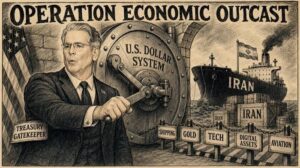
Here’s the detail that should reshape how compliance officers think about this authority: none of it requires a U.S. touchpoint. No U.S. person needs to be involved. No U.S.-origin goods need to change hands. No U.S. dollar clearing needs to occur. A company operating entirely outside the United States, trading gold, running shipping logistics, or supplying technology, connected to Iran in any of these five sectors, can face a full OFAC designation purely on that basis. For non-U.S. companies that have historically assumed OFAC’s reach stopped at some meaningful distance from their own operations, that assumption no longer holds in these five categories, and it hasn’t held in the previously covered sectors for some time either.
Practically, this means any company operating in aviation, digital assets, gold, shipping, or technology, along with any bank serving companies in those sectors, needs an immediate reassessment of Iran-connected counterparty exposure, including exposure that runs through several layers of ownership or intermediary relationships. Sectoral designations of this kind have a way of reaching further than the first obvious counterparty; a technology company two steps removed from an Iran-connected transaction can still find itself caught if it knowingly facilitated the underlying transfer.
The General License Purge: A Different Population Gets Hit
The second major piece of Operation Economic Outcast is less dramatic in headline terms but arguably more disruptive in practice, because of who it actually affects. OFAC indefinitely suspended five general licenses that had authorized specific, narrow categories of Iran-related activity: certain educational activities conducted by U.S. persons in third countries, noncommercial personal remittances to or from Iran, services connected to conferences held in the U.S. or third countries, and two separate general licenses supporting professional and amateur sports exchanges and academic exchange programs. Treasury’s stated justification ties to Iran’s continued disruption of energy markets, attacks on regional partners, reconstitution of its weapons programs, efforts to monetize the Strait of Hormuz, and continued support for terrorist proxies.
What makes this suspension category distinct from the sectoral sanctions described above is the population it actually hits. Sectoral sanctions target sophisticated commercial enterprises that, at least in theory, maintain real sanctions compliance functions. These general licenses were the lawful pathways that universities, standardized testing organizations, conference organizers, and athletic federations relied on for entirely non-commercial, often personal or academic, Iran-connected activity, organizations with little to no history of building sanctions compliance infrastructure at all.
The real-world disruption showed up within days. A major U.S. testing organization paused standardized test administration inside Iran, an online language-testing platform became unavailable to Iranian candidates, and a law school admissions organization reportedly suspended the accounts of Iranian nationals, including some dual U.S. and Canadian citizens, requiring individual outreach to the organization’s compliance function just to restore basic account access. These are not sanctions evasion targets; they’re ordinary institutions that built entire operational workflows around general licenses that existed, in some cases, for well over a decade, and that workflow just disappeared with no transition period.

Separately, on September 8, OFAC suspended long-standing aviation-related general licenses, including the specific authorization that had permitted temporary reexportation of U.S.-jurisdiction civil aircraft into Iran for things like maintenance sojourns. With that provision removed, aircraft subject to U.S. export controls are now prohibited from flying into Iran outside a narrow wind-down authorization. The effect was immediate and visible: major international carriers that had continued operating routes into Iran announced suspensions within days of the change.
The Licensing Policy Shift: Don’t Expect a Replacement
Layered on top of the specific general license suspensions, OFAC announced a broader change to how it will handle specific license requests going forward, establishing a presumption of denial for requests to engage in otherwise prohibited Iran-related activity. Under the new policy, specific licenses will be issued only where required by law or in genuinely exceptional and urgent circumstances, such as risk to life, limb, or environmental safety. This supersedes the more permissive case-by-case review that previously applied to license requests connected to democracy and human rights projects, support for independent civic organizations, and certain internet-based communications activities that didn’t fit neatly under an existing general license.
This policy shift matters enormously for how organizations should plan. Before this change, an organization losing access to a general license had a realistic fallback: apply for a specific license covering the same activity. That fallback effectively no longer exists for the vast majority of Iran-related requests. Any organization whose activity depended on one of the now-suspended general licenses should treat that activity as ended, not as pending relicensing, and should build a genuine wind-down plan rather than waiting for OFAC to grant an individual exception that, under the new presumption-of-denial framework, is unlikely to materialize.
What to Do Right Now
Two distinct compliance tracks follow from everything covered here. For organizations in aviation, digital assets, gold, shipping, or technology, and for financial institutions serving them, immediate counterparty risk reassessment is necessary given the sectoral expansion’s lack of any U.S. nexus requirement, and that reassessment needs to look through intermediary and ownership layers, not just direct counterparties. For universities, testing and credentialing organizations, conference organizers, and exchange or athletic programs that have relied on any of the now-suspended general licenses, the operating assumption needs to shift immediately from “pending renewal” to “activity has ended,” with concrete wind-down planning, mapped enrollment, contract, and payment consequences, built now rather than after an inadvertent violation occurs.
Part 2 of this series turns to the other half of Operation Economic Outcast: the new Strait of Hormuz guidance that creates sanctions risk even without any payment changing hands, and the escalating string of actions Treasury has taken against the specific banks serving as Iran’s remaining financial lifelines.