OFAC’s $1.4 Million Penalty Against a US Consultant: Why “I Just Give Advice” Doesn’t Work as an Iran Sanctions Defense
OFAC fined an unnamed U.S. consultant just over $1.4 million for Iran sanctions violations tied to advisory work provided to a leading Iranian software company, and this case deserves careful attention because it demolishes a defense I still hear surprisingly often: the idea that providing remote advice, strategic guidance, or consulting services to an Iranian business, without physically operating in Iran or directly running the company, somehow falls outside the reach of U.S. sanctions. It doesn’t, and OFAC’s enforcement order makes that point in granular, almost instructive detail.
The Backstory
This case has an unusual origin story. The consultant founded an Iranian software solutions company back in 1987 while living in Iran, and in 2011 created an Iran-incorporated holding company to preserve an ownership interest in that business. Over the decades, the software firm grew into one of Iran’s leading providers of financial, administrative, human resources, logistics, and management software, serving a wide range of Iranian industries and state-owned entities. At some point, the consultant relocated to the United States and, per OFAC’s finding, became a U.S. person subject to the same sanctions compliance obligations as any other American, a status that didn’t disappear just because the underlying business relationship in Iran predated the move.
What the Consultant Actually Did
Despite that changed status, OFAC found the consultant maintained active connections to both the software firm and the Iranian holding company for years, including a period between 2019 and 2023 during which the consultant provided management consulting and advisory services through virtual meetings with the companies’ senior officials. These weren’t passing courtesy calls. OFAC’s order describes substantive engagement: discussions covering corporate transactions, asset management, sales, marketing, accounting, human resources, corporate governance, and overall company strategy. In some instances, the consultant drafted the meeting agendas outright. In others, the consultant provided what OFAC called substantive advice, analysis, and information.
This is the core lesson of the case. Providing strategic or operational consulting services to an Iranian company, even entirely remotely, even without ever setting foot back in Iran, constitutes a service to Iran under the Iranian Transactions and Sanctions Regulations. There’s no carve-out for advice delivered over a video call rather than in person, and there’s no meaningful distinction between actively managing a business and simply advising the people who do.
The Money Trail
Alongside the advisory violations, OFAC found the consultant arranged, between June 2019 and August 2020, for dividend payments from the two Iranian companies to be wired into U.S. bank accounts. Those payments didn’t move directly from Iran to the United States; they transited first through banks in third countries, including Turkey, the United Arab Emirates, and Singapore, before landing in the consultant’s U.S. accounts. In total, the consultant received $713,615 in dividend payments through this structure. Routing payments through intermediary countries before they reach a U.S. account is a pattern OFAC and other sanctions enforcers have flagged repeatedly across unrelated cases, precisely because it’s a common technique for obscuring the true origin of funds from correspondent banks that would otherwise flag a direct Iran-origin transfer.
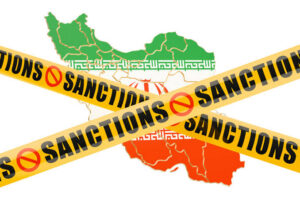
The consultant then used some of those dividend proceeds to purchase four real estate properties in Iran for relatives around or after 2021, adding a distinct property-acquisition violation on top of the underlying dividend transfers themselves. The consultant eventually abandoned ownership interest in both Iranian companies in 2022, but by that point the violations, spanning the advisory services, the U.S. bank processing of Iran-origin dividends, and the real estate purchases, had already accumulated across several years.
Why OFAC Called This “Egregious”
OFAC’s characterization of this case as egregious rested on a combination of factors that compliance officers should study closely, because they illustrate exactly what separates a garden-variety violation from one that draws this level of penalty and public condemnation. The consultant didn’t voluntarily disclose any of this conduct to OFAC. When OFAC issued a subpoena in January 2025 seeking information about the alleged violations, the consultant’s initial response was incomplete; only after OFAC sent a second subpoena specifically citing the deficiencies in that first response did the consultant provide a complete answer.
OFAC also found the conduct was willful, meaning the consultant knew the activities in Iran were prohibited and nonetheless engaged in a multi-year pattern of violations, understanding both that the services were being provided to companies in Iran and that the dividends being received originated from Iran. OFAC even pointed to a 2000 newspaper article the consultant co-authored about Iran’s digital revolution and the challenges the Iran sanctions program posed to Iran’s information technology sector, using it as direct evidence that the consultant was personally, demonstrably aware of the sanctions regime and its implications for exactly the kind of business at issue here. That’s a striking piece of evidence to see cited in an enforcement order, a defendant’s own published writing used to establish knowledge and intent years before the violations even began.
On the mitigating side, OFAC credited the consultant with having no OFAC enforcement history in the prior five years, having stopped the violative conduct before receiving the subpoena, and OFAC also factored in the consultant’s inability to pay a larger settlement amount, a mitigating consideration that isn’t always publicly acknowledged in OFAC orders but appears to have meaningfully shaped the final penalty figure here.
Two Broader Principles OFAC Wanted to Emphasize
OFAC used this case to reinforce two points that extend well beyond this one consultant. First, U.S. sanctions apply to all U.S. persons, a category that explicitly includes lawful permanent residents, not just citizens, wherever they happen to be located in the world. Someone who becomes a U.S. person, whether through citizenship or permanent residency, takes on the full weight of U.S. sanctions compliance obligations from that point forward, regardless of business relationships or ownership interests established years earlier while living abroad.
Second, and more broadly, OFAC stated plainly that U.S. persons who help manage the affairs of a commercial business in Iran, or any other jurisdiction subject to comprehensive sanctions, are almost certain to violate sanctions. That’s about as direct a warning as OFAC issues, and it should register with any U.S. person, executive, board member, consultant, or even informal advisor, who maintains any ongoing involvement with a business operating in a sanctioned jurisdiction, no matter how that involvement is characterized or how limited it may seem in scope.

The Cooperation Lesson
OFAC also used this settlement to reinforce the value of prompt, complete cooperation with its investigations. The agency was explicit that timely and thorough cooperation demonstrates an investigative subject understands the seriousness of their compliance obligations, and that it saves OFAC time and resources in completing an investigation efficiently. Conversely, OFAC warned that failing to cooperate in a complete and satisfactory manner doesn’t just forfeit potential mitigation credit; it can generate standalone penalties under OFAC’s own Reporting, Procedures and Penalties Regulations. The consultant’s initially deficient subpoena response is precisely the kind of conduct that pushed this case toward the higher end of OFAC’s penalty framework, independent of the underlying sanctions violations themselves.
Part of a Broader Campaign
OFAC explicitly tied this case to its Operation Economic Outcast campaign targeting Iran sanctions evasion, stating the agency will aggressively pursue enforcement against anyone violating U.S. sanctions against Iran. The investigation was coordinated with the FBI’s Los Angeles Field Office, underscoring that these matters increasingly involve interagency law enforcement coordination rather than OFAC acting alone on a purely civil administrative basis.
What This Means for U.S. Persons With Any Iran Connection
This case carries a clear message for anyone in the U.S. compliance community with clients, family members, or personal connections that touch Iranian business interests. Any U.S. person, citizen or lawful permanent resident, who provides advisory, consulting, or strategic services to an Iranian company, even entirely remotely and even without direct operational control, is providing a service to Iran under U.S. sanctions law and needs a license or a clear regulatory exemption before doing so. Dividend or other payment flows connected to Iranian business interests should be treated as sanctions-prohibited by default, regardless of how many intermediary jurisdictions the funds pass through before reaching a U.S. account, since routing through third countries does not launder the underlying prohibition and, as this case shows, OFAC is fully capable of tracing that path. And perhaps most importantly, when OFAC issues a subpoena, the only sound response is complete, prompt cooperation the first time; an incomplete initial response doesn’t just delay the inevitable, it becomes an independent aggravating factor that can meaningfully increase the eventual penalty.