“A Work Around”: The Pacific Route Indictment and the Anatomy of Russia Transshipment

A federal indictment unsealed in the Western District of Washington charges Ilya Pankov, a U.S. citizen and the registered agent of Seattle-area exporter Pacific Route, with conspiring to evade U.S. export controls on Russia. According to the Justice Department, from at least 2022 to 2024 Pankov and others shipped more than $100,000 worth of controlled industrial goods to Russian companies without the licenses required by the Bureau of Industry and Security, routing them through South Korea, Kazakhstan, and Turkey and filing false export and customs information along the way. Pankov has pleaded not guilty, and a trial is set for January 4. Everything below is an allegation in an indictment, and he is presumed innocent.
The case is small in dollars and large in instructional value. It reads like a field guide to how Russia-bound diversion works, how it gets documented, and why the paper trail turns a regulatory violation into a criminal case.
The Charges
The indictment charges conspiracy to commit offenses against the United States, illegal exports, smuggling, false statements, and conspiracy to commit money laundering. The goods named include spherical roller bearings, endothermic mats, fiberglass tape, and a main manifold. Prosecutors also seek forfeiture of property used or intended to be used to commit the offenses, plus proceeds.
The Alleged Method
According to the Justice Department’s description, the scheme worked through straw buyers in third countries and false filings in the government’s export systems:
- Third-country routing. Items were allegedly sent to South Korea, Kazakhstan, or Turkey, with the real destination being Moscow or other Russian cities.
- False Electronic Export Information. Pacific Route allegedly filed export data in the Automated Export System that listed a third country as the ultimate destination and stated that no license was required, concealing the true end user.
- A letter of instruction naming the wrong consignee. In May 2023 the company allegedly issued a shipper’s letter of instructions listing a Kazakhstan company as ultimate consignee when, according to emails, the Kazakh firm was just a pass-through for a Russian customer.
- Lies to Customs after seizure. After Customs and Border Protection seized shipments, Pankov allegedly filed supplemental petitions repeating the false story, once saying a shipment “had nothing to do with Russia,” and certifying that the company had fully complied with export regulations.
- Payments from third-country banks. The company allegedly received wires from a Kazakhstan bank and a Turkish bank, including a $124,980 transfer in September 2023, the basis for the money laundering conspiracy count.
The Emails

The Acting U.S. Attorney said the messages “capture in real time” how participants worked to subvert the system, and the quoted excerpts show why. In a December 2022 exchange, a Pacific Route employee, according to DOJ, wrote to a U.S. supplier that the Harmonized System codes for the products showed they were on the sanctions list, and said they were trying to find “a work around… shipping to Korea or something.” The same person later allegedly said the company planned to ask the Russian customer about shipping through South Korea “the way we do for a few other customers.” When the Russian company proposed that a Kazakh “delivery partner” buy the goods directly, an employee asked about the new order and was allegedly told that the items were on the sanctions list, so they could not ship to the Russian company, but the Kazakh firm would get the parts to it.
Two points stand out. First, the participants appear to have understood the restriction and openly discussed avoiding it. Knowledge and intent, usually the hardest element in an export case, were allegedly written down. Second, the phrase “the way we do for a few other customers” suggests a pattern. If accurate, it is the kind of statement that prompts a look back across the whole customer base.
What the Case Teaches
- The HS code lookup is itself a red flag. An employee who researches a classification and notes that it is on a restricted list has put the company on notice. The compliance question is not whether the employee finds a route around the list but what the company does next. Controls should require escalation to a designated person when any employee flags a classification or destination restriction, and prohibit “work around” discussions.
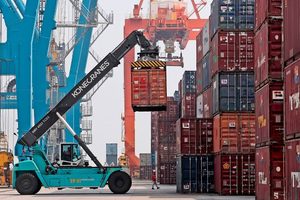
- Destination countries known for transshipment deserve extra scrutiny. Kazakhstan, Turkey, and others have been identified in government guidance as common transit points for Russia-bound goods. Orders that suddenly switch to a third-country “partner” after a restricted-country customer cannot buy, a pattern the indictment describes, are a classic indicator. Multi-agency guidance on third-party intermediaries makes this point.
- AES filings are certifications. Electronic Export Information is a statement to the government under penalty of law. Filing a false destination or license determination exposes the company and the individual to false-statement and smuggling charges, separate from the underlying export violation.
- What you tell Customs after a seizure matters. The supplemental petitions are charged as false statements. A company that has already filed false data and then doubles down in a detention or seizure response compounds exposure. Anyone responding to a seizure should do so through counsel and verify every factual claim.
- Payment flows tell the story. Payments from banks in transshipment countries on behalf of Russian customers, or from parties with no apparent connection to the order, are a red flag for the exporter and for the financial institutions. Exporters should reconcile payer identity to customer identity.
- Small exporters are in scope. The case involves a small business, not a multinational. Enforcement attention on Russia diversion has reached every size of exporter, and small companies often lack a dedicated compliance function. Registered agents and principals can be personally charged.
- Reputable suppliers are also in the picture. The company allegedly ordered products from U.S. suppliers who may be asked what they knew. Manufacturers and distributors who sell to freight forwarders or small exporters should apply know-your-customer and end-use screening, and ask where the goods are really going.
A Practical Checklist for Exporters
- Classify every item (ECCN or EAR99) and know the license requirements for Russia and Belarus, including the broad controls on industrial items identified by Harmonized System code.
- Screen customers, consignees, and intermediaries against restricted-party lists, and look at ownership and address, not just names.
- Require end-use and end-user statements, and verify them. Be skeptical of new third-country buyers who appear after a restricted-country customer was turned down.
- Build escalation triggers for HS code flags, destination switches, unusual routing, freight forwarders listed as consignees, and payments from unrelated third parties.
- Train sales, logistics, and finance staff that discussing a “work around” is itself dangerous, and that the right response is to stop and escalate.
- Control AES submissions: assign responsibility, review license determinations and destinations, and keep supporting documents.
- Route customs and BIS communications through legal counsel, and verify facts before certifying compliance.
- Look back. If the company discovers a past problem, consider voluntary self-disclosure to BIS and DOJ’s National Security Division, and act quickly.
The Broader Pattern
This indictment sits alongside the Extreme Networks settlement from last week, in which OFAC and the Justice Department resolved a case involving a distributor’s misleading end-user statements and a blocked Russian defense manufacturer. Different statutes and different defendants, but the same lesson: the story told on the paperwork has to match the story in the emails, and intermediaries are the usual place where the two diverge.
What to Watch
The January 4 trial date, any superseding charges or additional defendants (the indictment refers to others), and whether the supplier and bank sides of the transactions draw inquiries.