From Crisis and Uncertainty to Trust: Notes from the 13th International Ethics Summit in Istanbul
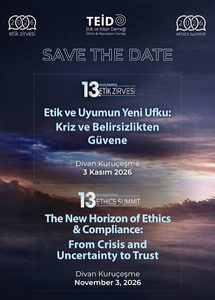
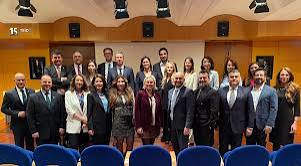
On November 3, I had the pleasure of attending the 13th International Ethics Summit, hosted by TEİD, the Ethics and Reputation Society, at Divan Kuruçeşme in Istanbul. The full-day program brought together ethics and compliance leaders, executives, regulators’ counterparts, academics, and advisers from Türkiye and beyond under a theme that fits our moment: “The New Horizon of Ethics & Compliance: From Crisis and Uncertainty to Trust.”
Thank You to Our Hosts
First, my thanks to TEİD and its team for a well-run and thoughtful event. A special thank-you to Dr. Bahar Karacar, TEİD’s Assistant Secretary-General and Project and Training Coordinator, for her warm welcome and for the care that went into organizing the summit. And a shout-out to Altuğ Özgün, Managing Partner of CBC Law and a member of the TEİD board, with whom we collaborate closely at CBC Law, and who moderated one of the day’s most timely discussions, on artificial intelligence in compliance. Thanks also to TEİD Chairperson Rana Günay Hoffman of Koç Holding, who opened and closed the summit, and to every speaker and panelist who shared their time and perspective.
The Premise: Trust as a Strategic Priority
The summit’s invitation framed the central question well. Organizations operate amid rapid socio-political change, economic pressure, and technological transformation, and sustainable success and corporate reputation come not only from following rules but from an ethics and compliance approach that builds trust amid uncertainty. The program treated trust as a strategic priority tied to ethical leadership, corporate culture, and governance.
That is a message I have been pressing in this blog for years: compliance is not a cost center and not a checklist. It is the infrastructure of trust, with employees, customers, regulators, and investors. Seeing a room full of professionals take that premise seriously was encouraging.
What the Day Covered
The agenda moved through the issues that define the profession today. Here are the themes I took from it.
Ethical leadership when it matters most. The opening panel, “Ethical Leadership in Times of Crisis and Uncertainty,” paired business leaders from Ford Otosan and Coca-Cola İçecek, moderated by a TEİD vice-chair from bp. Putting CEOs and board members, not just compliance officers, at the center of the conversation sends the right signal. Culture is set by leaders, and ethics programs succeed or fail on whether the top of the house means it. In the weeks since I wrote about governance failures at the top of major companies, that point has only become more concrete.
Voice and speak-up culture. A fireside chat, “Does Every Voice Find an Echo?” with the country general manager of L’Oréal Türkiye, addressed whether employees’ concerns are heard and acted on. Speak-up systems are only as good as the response they receive. Every hotline report that goes nowhere teaches employees not to report.
Technology and trust. This was the strongest thread of the day. Oxford’s Professor Ignacio Cofone gave a keynote on “What We Get Wrong About Trusting AI,” and a panel on “Connected Intelligence, Human Accountability: What It Takes to Use AI in Compliance” brought together practitioners from Moody’s, SOCAR Türkiye, and Deloitte. The title of the panel captures the point I have made in recent posts: AI can help compliance teams analyze data and spot patterns, but accountability stays with humans. Regulators and prosecutors on both sides of the Atlantic are saying the same thing, that AI is a tool and not a substitute for judgment.
Beyond the company: ecosystems and standards. The afternoon panel, “From Compliance to Ecosystems: Partnerships, Standards and Transformation,” included voices from the Center for International Private Enterprise, the OECD, and the Siemens Integrity Initiative. Collective action, supply-chain standards, and public-private partnerships matter, particularly for third-party risk, an area that continues to produce the largest enforcement risks for multinational companies.
Values and performance. A fireside chat with Eda Erdem, captain of the Turkish women’s national volleyball team and Fenerbahçe Medicana, on upholding values and staying competitive, offered a reminder that integrity and high performance are not in tension. Sports offers vivid examples of how culture and standards under pressure create long-term success.
Building trust between the old and the new. The closing keynote by Prof. Selçuk Şirin of New York University, “INTERREGNUM: Building Trust in the Space Between the Old and the New,” spoke to the uncertainty that organizations feel as established assumptions give way. That is a fitting theme for compliance officers navigating AI, geopolitical tension, shifting enforcement priorities, and new reporting demands.
My Takeaways
- Ethics and compliance are leadership issues. The strongest programs have visible commitment from the CEO and board, not just from the compliance department.
- Technology is both the challenge and the tool. The questions are how to govern AI use, keep humans accountable, and use data to detect risk without losing judgment.
- Culture is the control that makes the other controls work. Policies, training, and monitoring all depend on whether employees believe that speaking up is safe and that leaders will act.
- Trust is built across the ecosystem. Companies cannot do this alone. Suppliers, partners, industry groups, and governments all shape the environment.
- The profession is global. The concerns of compliance leaders in Istanbul, from third-party risk to technology to cross-border enforcement exposure, look much like those of their counterparts in Washington, London, and Frankfurt. The conversation benefits from comparing notes.
A Note on Cross-Border Enforcement
For Turkish and other non-U.S. organizations, an ongoing question is how U.S. enforcement reaches them: through the Foreign Corrupt Practices Act, sanctions administered by OFAC, export controls, and the use of the U.S. financial system and U.S.-origin goods. These are subjects Altuğ and I work on together, and I look forward to continuing the conversation with the TEİD community on how companies in Türkiye can manage that exposure in practice.
Thank You
Congratulations to TEİD on thirteen years of building a community around ethics and reputation, and thank you for the invitation to Istanbul. It was a privilege to be in the room with colleagues who care about doing business the right way. I hope to be back.
Michael Volkov is CEO of The Volkov Law Group LLC and host of the Corruption, Crime & Compliance podcast.