The Nvidia CEO Resignation, Part 1: Who Knew, and What Did Governance Do? The Espionage Exposure Question

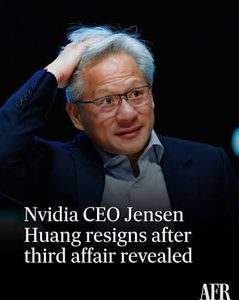
On November 12, 2026, Nvidia announced that Jensen Huang had resigned as president, chief executive officer, and director, effective immediately. CFO Colette Kress became interim CEO, and board member Harvey C. Jones was named the company’s first-ever chair. The resignation came four days after the board announced an independent investigation, and after press reports that Huang had a close relationship with a Chinese businesswoman who allegedly passed information to Beijing.
This three-part series looks at the governance lessons. Part 1 asks the governance question: what controls should have existed around a CEO’s personal relationships when a hostile intelligence service might be exploiting them, and who needs to answer for the answer. Part 2 covers leadership, culture, and the market consequences. Part 3 addresses board and officer liability under Caremark.
A Note on What Is Known
This is a fast-moving story, and the public record is thin. What the record supports as of now:
- Nvidia’s board said on November 8 that independent directors had retained outside counsel, reported to be former acting U.S. Attorney Joon Kim and the law firm Wachtell, Lipton, Rosen & Katz, to investigate, citing reports that Huang had been the target of a foreign intelligence effort.
- Huang issued a statement on November 8 apologizing for being unfaithful to his wife. Reporting says he denied compromising Nvidia’s security.
- Press accounts say the woman was a Chinese business executive and that The New York Times reported she was recruited by China’s Ministry of State Security. China has denied the allegations as a smear.
- The company has not said what the investigation found, and its announcement gave no reason for the resignation.
- Reporting I reviewed does not describe the woman as a Nvidia subordinate. Some accounts describe her as a business contact or client. Nor have I found reporting that the board, the C-suite, or the general counsel knew about the relationship before the press reports. Those are the questions the investigation should answer, and I treat them below as questions, not conclusions.
Why a CEO’s Personal Relationships Are a Corporate Security Issue
Governance programs usually treat a CEO’s private life as private, and rightly so in most cases. Nvidia is not most cases. It designs the chips at the center of AI competition and is the subject of intense export-control policy debate. Its CEO is a high-value target for any intelligence service, and he has access to product roadmaps, customer allocations, government discussions, and supply chain information. Counterintelligence professionals have long taught that compromise operates through personal relationships, financial pressure, and secret behavior that creates leverage. A relationship concealed from the board, whatever its nature, creates exactly the vulnerability that adversaries look for.
The governance point does not depend on the specifics of this case. It is that companies holding strategic technology need a framework that addresses the risk of a senior executive being targeted or compromised, and that framework needs to function without turning the board into a monitor of private lives.
The Governance Questions the Board Investigation Must Answer
If I were advising the independent directors, I would want answers to these questions, which are the ones regulators, shareholders, and plaintiffs will ask:
- When did anyone first learn of the relationship or of any suspicious contacts? Was it from the press, or earlier? Who knew, in the board, the C-suite, legal, security, or compliance? If anyone knew earlier, what did they do?
- Did Nvidia have a counterintelligence or insider-threat program that covered executives? Did it include travel, foreign contacts, and reporting obligations for senior leaders?
- Was there a process for conflicts of interest and relationships with business counterparties or vendors? A relationship with someone who has commercial dealings with the company is a classic conflict issue, regardless of whether it is romantic.
- What access did the woman have to company information, events, or people? Was information shared, and was it controlled?
- What did the code of conduct and board policies require? Many companies require disclosure of relationships that create conflicts or affect judgment, and require executives to report security approaches.
- Did the general counsel and the chief security officer have a path to raise concerns about the CEO to the independent directors? An effective reporting line to the board is essential when the subject is the CEO.
- Did the board have a lead independent director or independent chair with clear authority? Nvidia’s press release describes Jones as its first-ever chair, which suggests that previously there was no independent chair role, a structure that concentrates power in a founder-CEO. The board should explain how it was organized to oversee him.
- How did the company handle national-security-sensitive information relating to its export-controlled products? If an executive was targeted, regulators will ask what controls limited the damage.
The “Blind Eye” Hypothesis and How It Would Matter
The evidence suggests that Huang haad prior improper relationships, particularly with a direct report. This relationship was known to many in the company. But no one ever addressed this violation of the Nvidia code of conduct. Instead, this improper relationship was allowed to continue, thereby increasing the security risk to teh company. The Chinese intelligence service was likely aware of this fact and took action to exploit this weakness.
If the investigation confirms that senior people knew of the relationship, and of any security concerns, and did nothing, then the question changes from “what did the CEO do” to “why did the people responsible for oversight not act.” Employees, directors, and counsel who learn about conduct that creates a risk to the company have duties to escalate. The reporting line for the general counsel runs to the board, not only to the CEO. If knowledge existed and no one acted, that would be the core governance failure.
Practical Lessons for Any Board
- Adopt a senior-executive security and conflicts framework. Cover relationships with counterparties, foreign contacts in sensitive roles, and reporting duties. Make it apply to the CEO, and have it overseen by independent directors.
- Give the GC and CSO a protected line to independent directors. The ability to escalate concerns about the CEO must be explicit, practiced, and free from retaliation.
- Separate or balance the CEO and board chair roles. A lead independent director with defined authority is the minimum.
- Plan for the investigation before it is needed. Pre-agree how independent directors retain counsel, preserve evidence, and communicate.
- Treat national-security exposure as enterprise risk. For companies in export-controlled technology, insider and intelligence threats belong on the board’s risk dashboard.
What to Watch
The investigation’s findings, if disclosed; any congressional or regulatory inquiries; whether the board describes what it knew and when; and the November 17 earnings call. Part 2 turns to leadership, culture, and the market.